
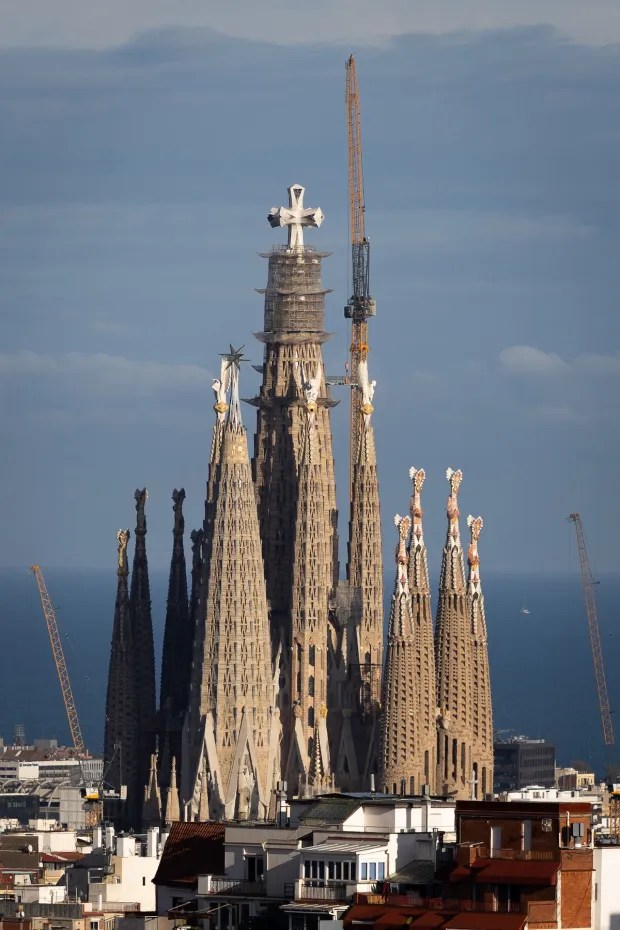
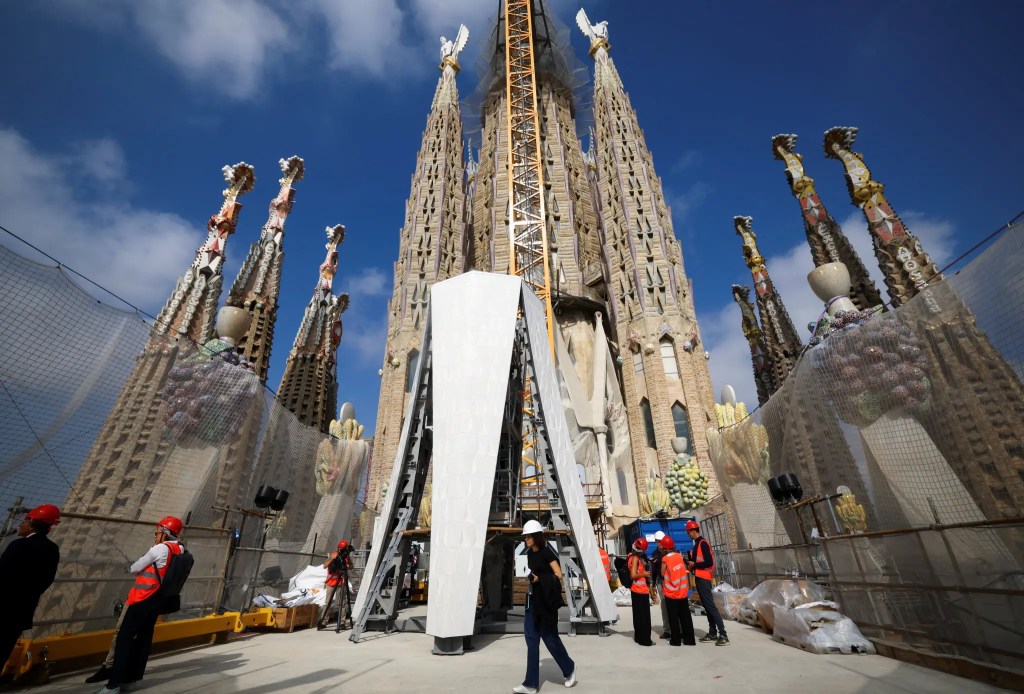
Over a hundred years in the making, the Sagrada Família is finally almost finished. With the addition of the cross atop the Christ Tower, the basic structure is now complete. But interior details remain to be completed, as well as the Glory facade on the exterior.
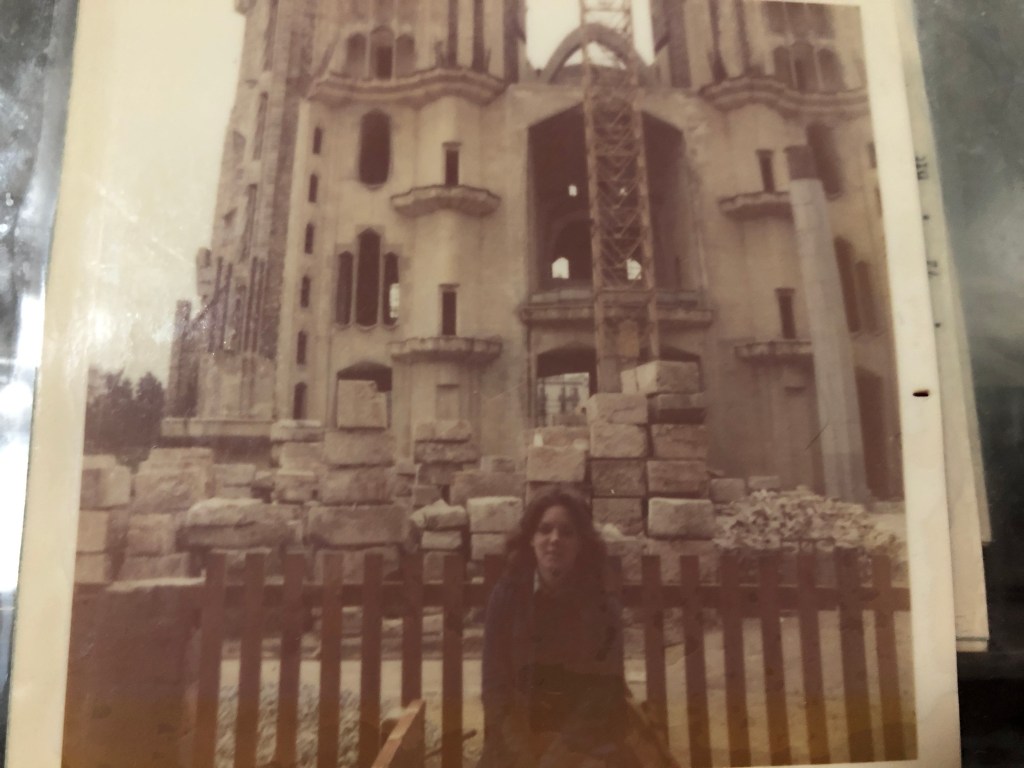
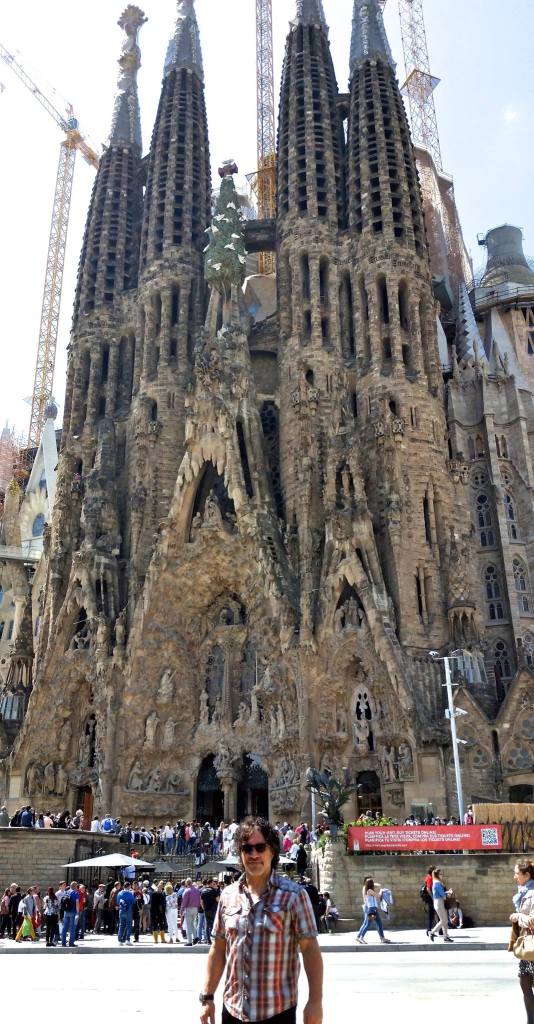
That’s me below in 1972 in the photo on the left in front of the sooo unfinished Basílica! There was no “inside” and the offices of the architects and artisans were totally open to public view. For decades it was a building site where generations of stone masons and carpenters worked around the tourists. Only in the past 15 years, since work began on the interior, has it seemed like a church and not a construction site. Slightly different on the right, no? I don’t know who that guy is in the photo, but it was a good comparison shot.
National Geographic España just published an issue devoted to the church, its history, and its meaning. You can read for yourself, if interested, here in Spanish. The pictures are pretty! If you don’t want to open the magazine to view the article, scroll down the right-hand side.
Construction began over 150 years ago, and has continued for 100 years after Antonio Gaudí’s death in 1926. Progress has been slow, yet suspended only during the Spanish Civil War and the COVID epidemic. Remarkably, the Sagrada Familia Basílica has never depended on governmental support, but has been built entirely through donations and tickets sales. It is called a basilica and not a cathedral, because it is not the seat of a bishop (the central church of an archdiocese). Basilica status is granted by the Pope to important church buildings. It was consecrated as a basilica by Pope Benedict XVI in 2010.
Last February, a huge three-dimensional cross standing 56 feet tall by 44 feet wide and weighing 12 tons, was placed onto the tower of Jesus Christ, the tallest of the towers and the last to be built. There are 18 spires representing the 12 apostles, the four evangelists, the Virgin Mary, and Jesus. The Basílica is now the tallest Christian house of worship in the world. Its measurements, like every aspect of its construction, are no accident. Gaudí, who was deeply religious, did not want his monument to God to be taller than the city’s tallest mountain, Montjuic, because he believed that no work of man should be greater than God’s work. However, because the site of the Basílica is 114 feet above sea level, it actually does surpass the height of Montjuic. A ceremony to mark the completion of the Christ tower is due to take place on the 100th anniversary of Gaudí’s death on June 10, 2026.
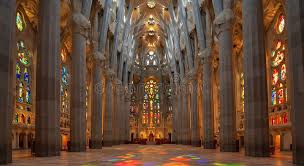
Books and tours of the Sagrada Família explain the religious symbolism portrayed in each tower, facade, and aspect of the building. Gaudí’s themes revolve around God, nature, and Catalunya. The amount of detail is overwhelming. The interior of the Basílica resembles a forest. The pillars are trees through which a path leads to the altar. Gaudí is said to have given life to this phrase from the Bible’s book of Genesis: “God said let there be light, and there was light.” All of the windows are constructed in colors to enhance the daylight – reds and oranges through the west windows at sunset, and blues and cool greens through the windows in the eastern facade at sunrise.
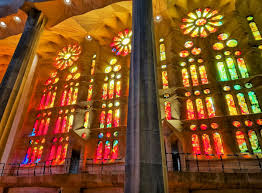
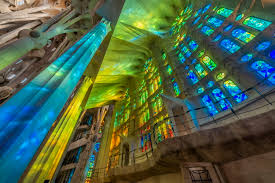
When Gaudí died in 1926, less than 25 percent of the church had been erected. Portions of the Basílica along with some of Gaudí’s initial plans and models, were destroyed during the Spanish Civil War. Since then, analysis of salvaged designs, original interpretations, and computer modeling have helped the project reach its current milestone. Besides some work on the interior, the Glory facade is expected to take a further 10 years to complete with final completion projected to occur by 2034.
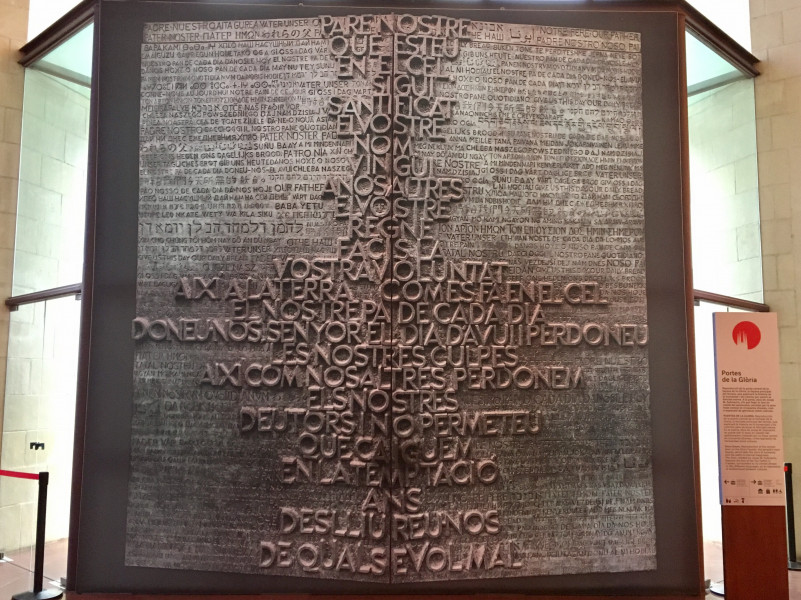
While the Nativity facade is dedicated to Jesus’ birth and his childhood, and the Passion facade remembers the last days of his life, the Glory facade explores themes of the Last Judgment, the afterlife, and heaven. It will face the sea and be the main entrance to the Basílica. The door to the facade features the full Lord’s Prayer in Catalan, and the rest of the door is filled with the phrase “Give us this day our daily bread” in fifty different languages. The designed grand staircase to the facade and entry will require demolishing some of the surrounding residential buildings. This has led to ongoing disputes with residents, which will likely end up in court.
I recently read that the LEGO Architecture line, which includes sets of landmarks in New York, London, Paris, Tokyo, and Singapore, will add Barcelona to that list. The Sagrada Família now defines the Barcelona skyline as much as the Eiffel tower in Paris or the Empire State building in New York. The Sagrada Família LEGO set with 12,060 pieces, would become the largest LEGO set ever.
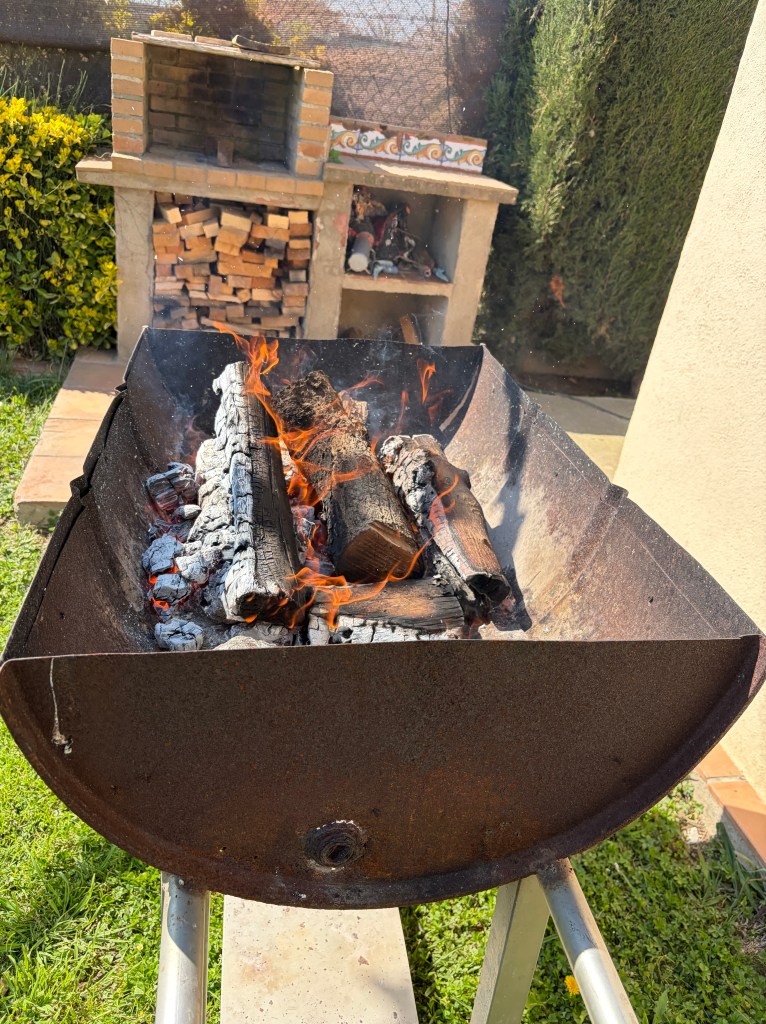
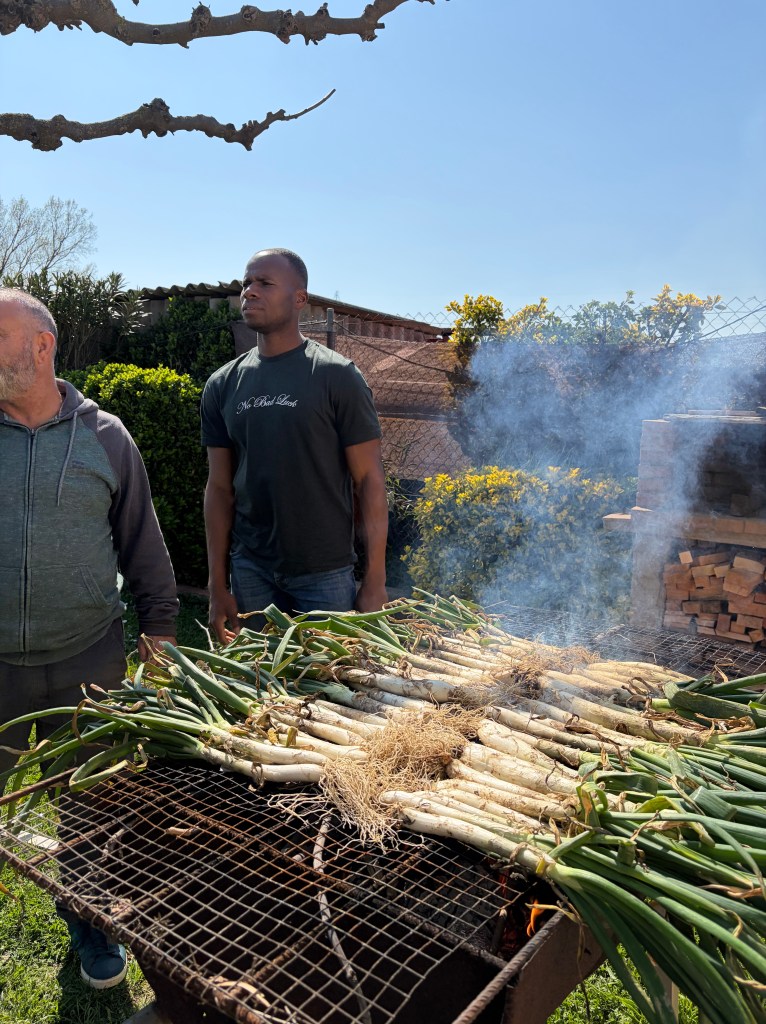
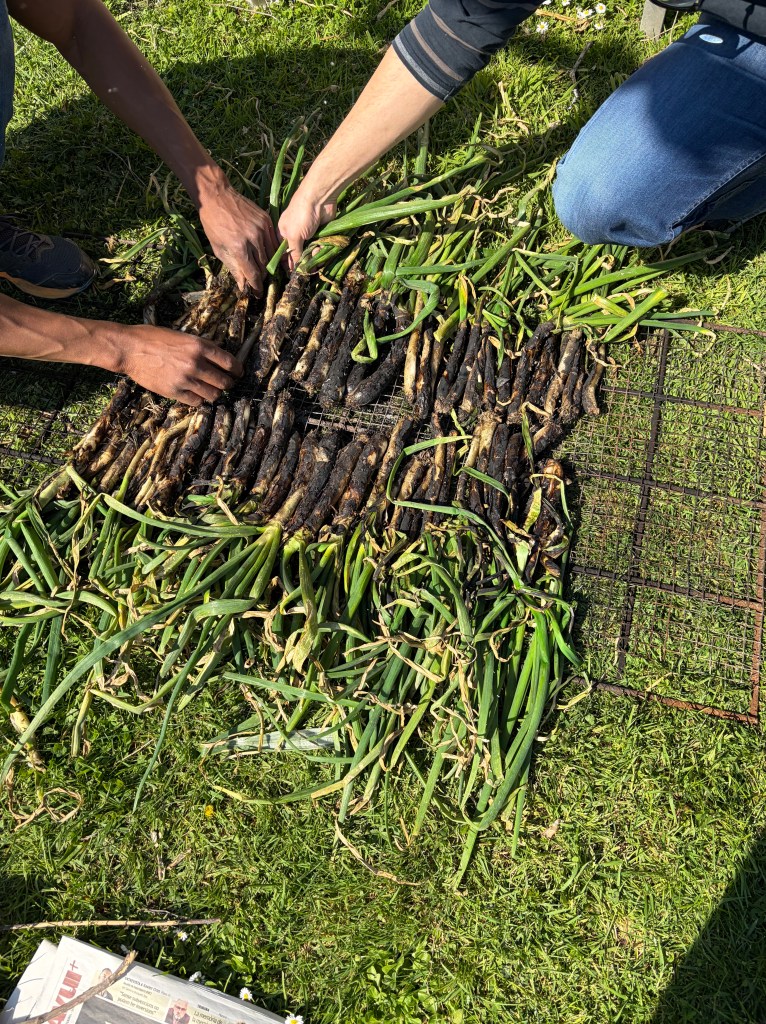
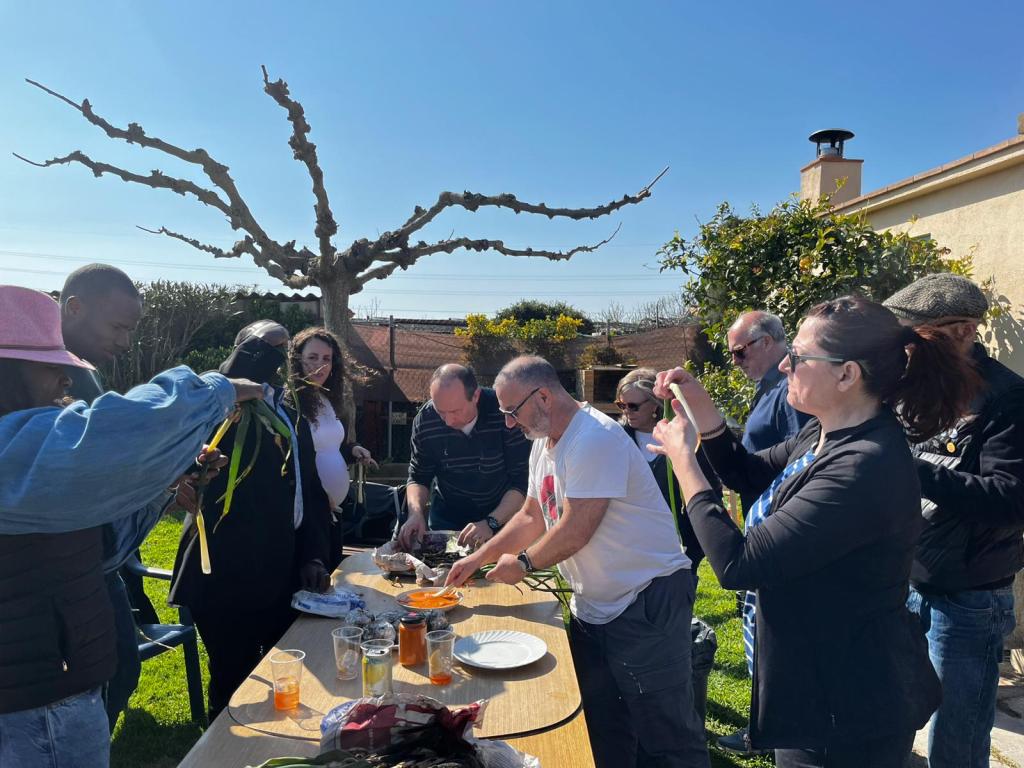
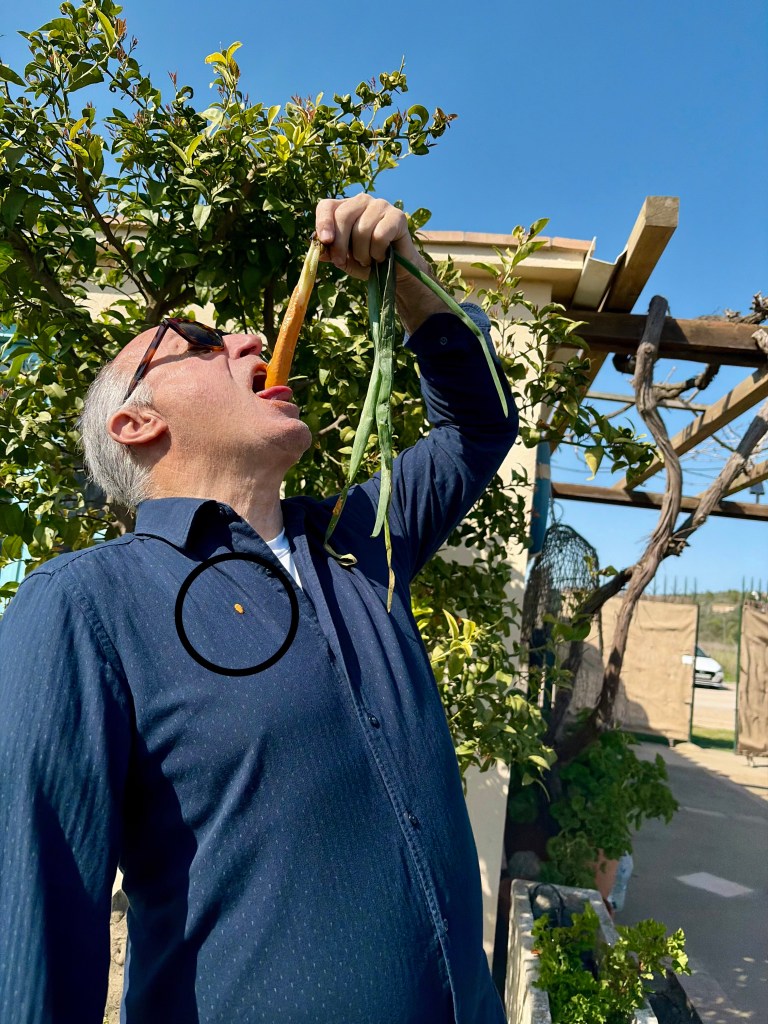
Last weekend I went to my first calçotada – a barbecue of giant green onions. A calçot is a type of mild, sweet green onion native to Catalunya. It is similar to a large scallion or leek. Typically, they are grilled over hot fires until charred (burned), then peeled and dipped into a romesco sauce. The calçotada I attended was given by one of the students in my Catalan class at his family’s barraca. The concept of the barraca is so cool – it’s a small house, shack, or cabin sometimes in the forest, but often just outside of town, that is owned by a family and is used only for gatherings for special meals. Barracas have no bedrooms, only a small kitchen, traditionally, and a dining area. There is usually also an outdoor dining area for get-togethers when weather permits.
Bon appetit!!












 Susie's Senior Year Abroad